adhd.coaching
What’s coaching?
What’s ADHD coaching?
and many FAQ’s.
I want to begin with a passage from Dale Favier’s essay What People Really Look Like — it captures the essence of the kind of ADHD coaching I try to bring to the table:
“Everybody on a massage table is beautiful. There are really no exceptions to this rule. At that first long sigh, at that first thought that ‘I can stop hanging on now, I’m safe’ — a luminosity, a glow, begins. Within a few minutes the whole body is radiant with it. It suffuses the room: it suffuses the massage therapist too. People talk about massage therapists being caretakers, and I suppose we are: we like to look after people, and we’re easily moved to tenderness. But to let you in on a secret: I’m in it for the glow.”
“I’ll tell you what people look like, really: they look like flames. Or like the stars, on a clear night in the wilderness.”
This is the space I try to provide my clients: to pause, relax, feel safe, and meet their incredible selves.
And just so you know, I’m in it for the glow, too.
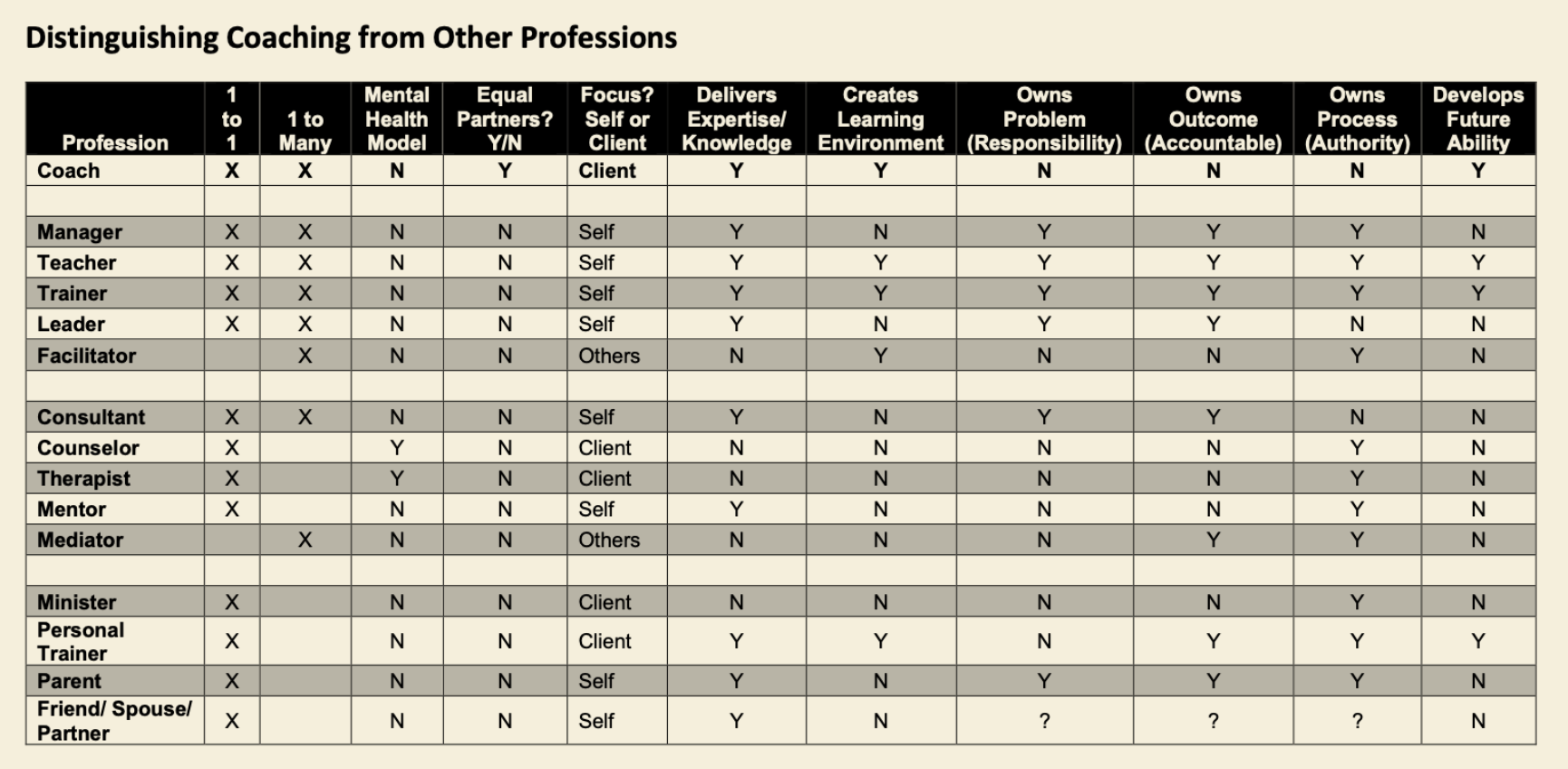
Coaching is often confused with therapy, consulting, mentoring, or even parenting. The simplest way I’ve seen this distinction made is Michael Stratford’s “Bicycle Story.” Imagine you’re learning to ride a bike:
- A consultant studies the mechanics of the bike. They teach you the physics of balance and propulsion, tell you where to sit and where to put your feet, maybe recommend a training program. Then they leave.
- A therapist discusses the basis of your fears about riding, the consequences of falling, whether your parents rode and why that might matter. They help unwire whatever baggage may be impeding your potential to ride.
- A parent buys the bike, may put on training wheels, runs alongside holding the seat until you can balance, then cheers you off as you ride into the sunset.
- A mentor shares their experience and tips, models the way they think you should ride, tells you the best bike to buy in their opinion. Sometimes holds an ‘I’ve done this before, so listen to me’ position.
- A coach listens to your desire to try riding. Asks if you need instructions, and where you might get them. Asks if you like the colour or kind of bike you’re about to ride. Helps you pick it up and get on. Runs alongside, checking in to see if you’re enjoying it, asking what might make it more fun. Helps you discover what you need to take care of yourself if you fall. When you stop, the coach asks about your experience, what was valuable, and whether you want to pursue mastery. If yes, they ask how you’d devise a plan. If not, they ask if you want to continue riding casually, or devise a plan to sell the bike.
Adapted from Michael Stratford, MCC — “The Bicycle Story.”
Every ADHD coach is also doing life coaching. The difference is that we take into account how ADHD affects every part of a client’s life. A few of the things an ADHD coach attends to:
- Listens and questions through an ADHD lens.
- Helps clients uncover and build from their ADHD-specific strengths.
- Watches for the impact of positive illusory bias and helps clients see what’s actually happening.
- Recognises when a client is ruminating or in an emotional flood, and knows how to interrupt gently.
- Appreciates rejection sensitivity, perfectionism, and reward deficiency as real and shaping forces.
- Provides unconditional acceptance and normalises the client’s experience.
- Helps clients learn which environments support them and which exacerbate their symptoms.
- Addresses internalised stigma and helps clients take the pressure off.
- Supports clients moving through the grief cycle of a later-in-life diagnosis.
- Celebrates progress, no matter how small.
Adapted from ADD Coach Academy (ADDCA), “Distinguishing an ADHD Coach from Other Life Coaches.”
I coach students and working professionals in their 20s and 30s, both formally diagnosed and quietly suspecting. Most of the people I’m drawn to work with are at the point I once was: passing as okay-to-normal on the outside, but exhausted by the daily cost of holding it all together.
What I bring to that work is more than the ADDCA frame I trained in. It’s also:
- My own diagnosis journey. I was diagnosed with Autism and ADHD at 20, while at IIT Delhi, after years of self-doubt, inconclusive medical tests, and the slow recognition that something was different. I know what it’s like to go through school and undergrad without a name for what was happening, and what it feels like when the name finally arrives, including the grief that often comes with it.
- The Indian academic context. I understand the specific shape of growing up smart and overwhelmed inside the Indian education system: the home tuitions, the JEE/JAM exam culture, the IIT pipeline, and the way ADHD so often goes unnamed because ‘he’s just bright but lazy’ carries you through Class 12.
- The scaffolding I’ve been building for myself for years. Record books, mind mapping, Anki-style memory work, the Jim Kwik learning foundations. These weren’t theoretical for me. They were how I survived school and undergrad before I had a name for any of it. Some of them have a place in our work together.
In sessions, I draw on the ADHD coaching frame I trained in at ADDCA: listening through an ADHD lens, holding your goals in front of you when your brain wants to set them down, watching for moments of emotional flood or rumination, normalising what your brain is doing rather than treating it as a failure of willpower, anchoring you to past successes you’ve forgotten about, and helping you customise systems that fit how you work, rather than how someone told you you should.
ADDCA defines coaching as:
“Built upon unconditional acceptance and a powerful appreciation of the client’s potential, uniqueness, strengths, capabilities, and wholeness, coaching is an ongoing collaborative partnership created to facilitate personal growth and awareness that leads to conscious choice, focused action, and a meaningful, rewarding life.”
ADD Coach Academy.
If you’d like to read the formal definitions of ADHD coaching, you can visit the ICF and PAAC. Check the FAQ below — a table from ADDCA showing how coaching differs from other related professions.
A note before you read the table: ADDCA makes some generalisations about other professions, and you may not agree with every statement. Use it as a starting point.